TL;DREurope's EES has replaced passport stamps: expect a photo and fingerprints at your first entry, and know that your 90 days in 180 are now counted automatically. ETIAS is not running yet, so do not pay any site for it.
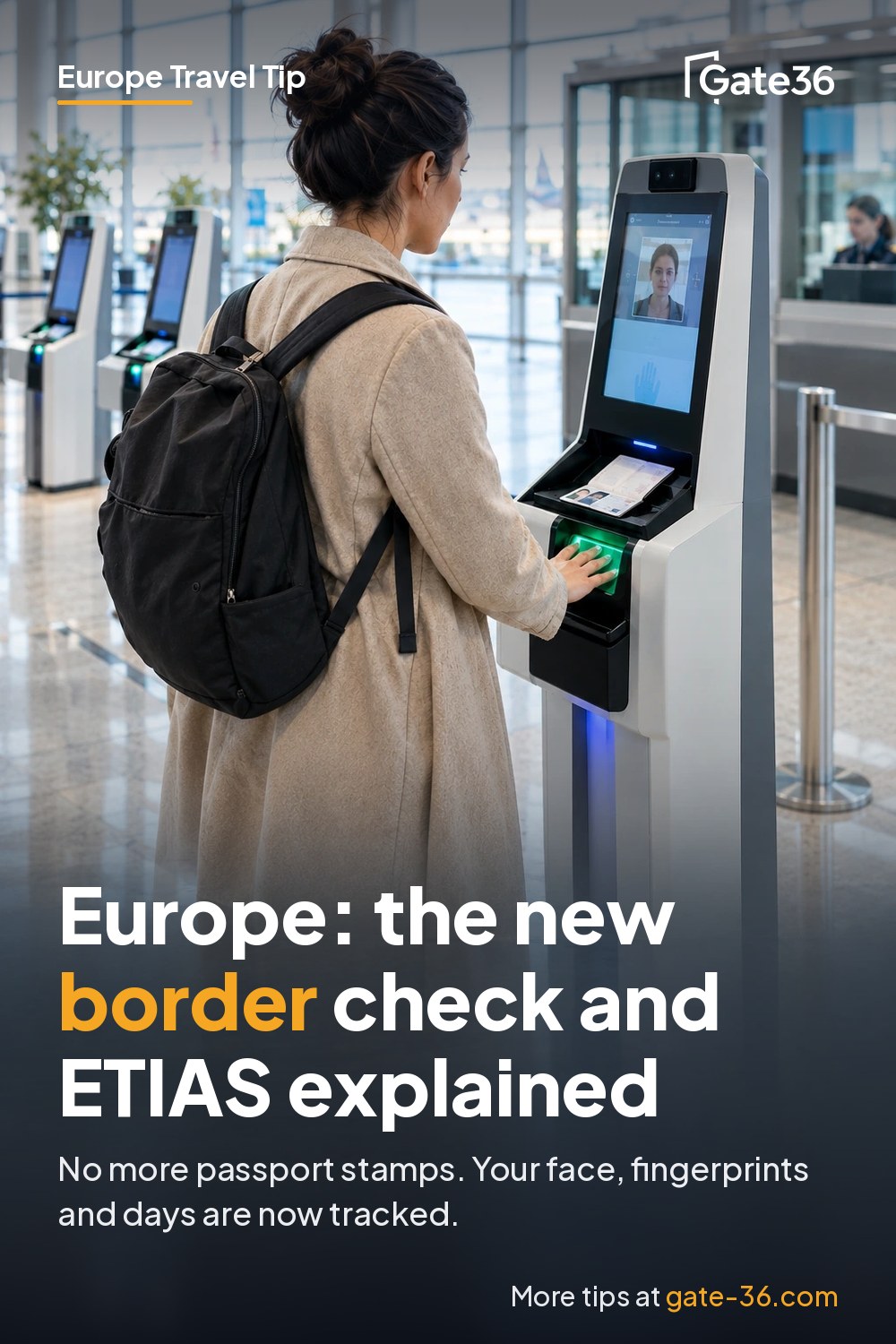
If you visited Europe before this spring, you probably remember the passport stamp. That is gone. Since 10 April 2026, border officers in 29 European countries record visitors from the US, the UK, Canada and other non-EU countries in a digital Entry/Exit System (EES) instead, with a photo of your face and your fingerprints (European Commission).
The second change, ETIAS, is not here yet. The official site says it is not in operation and that no applications are being collected, so any website charging you for an ETIAS today is not the official one (official ETIAS site).
Why this matters
Passport stamps were easy to miss or misread. The EES counts your days automatically. The EU's short-stay limit is 90 days within any 180-day period, counted as one single period across all the countries that use the system. If you stay longer, the system flags you as an overstayer and adds you to a list that border, immigration and visa staff can see, and other penalties can apply under national law (EES: data held).
Your first entry since the system started also takes longer, because officers have to collect your data. Refusing to give your fingerprints or a photo means you will be denied entry.
What happens at the border
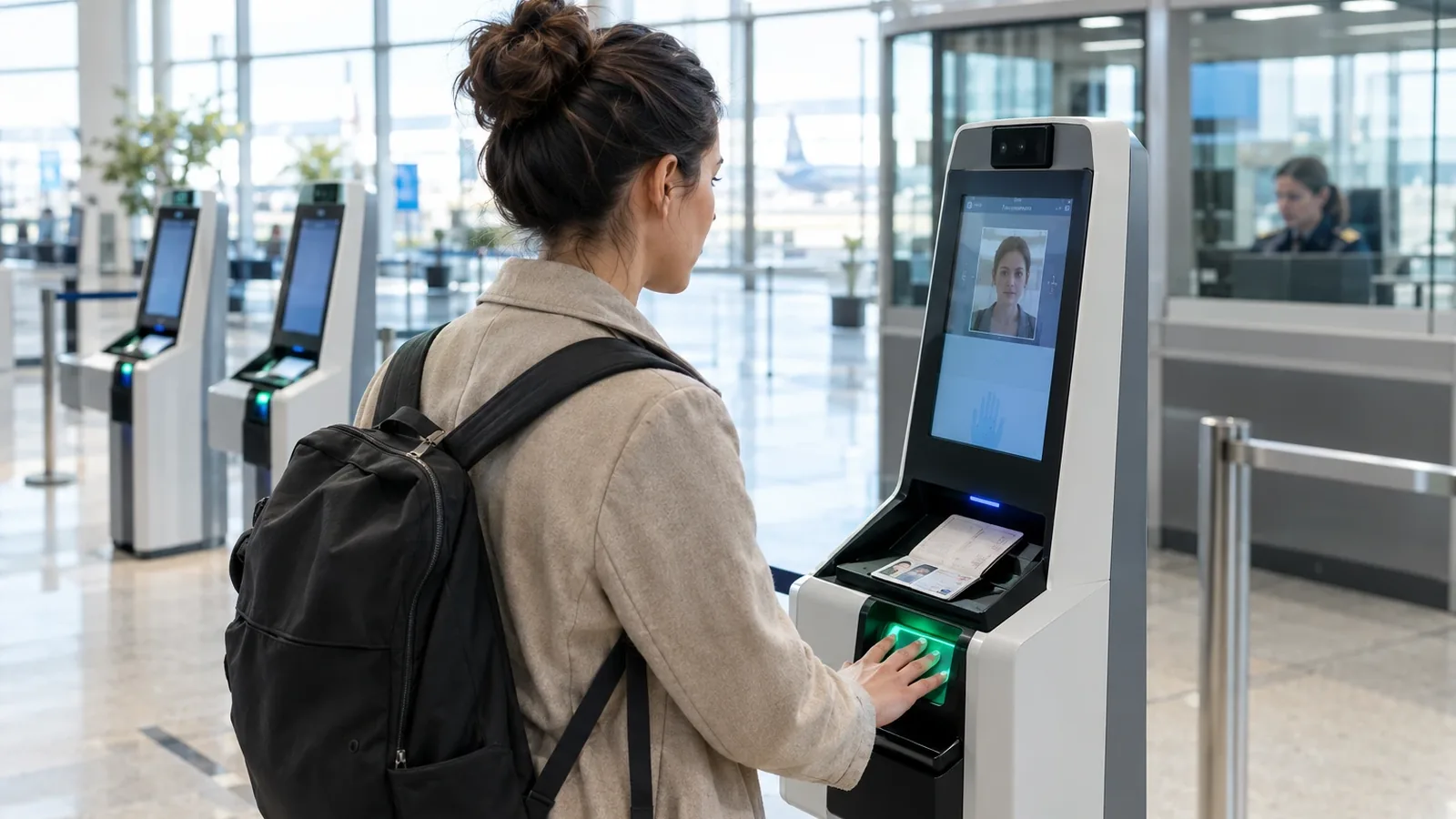
- Your first entry since EES started: an officer scans your passport and takes a photo of your face and four fingerprints. If you travel with a Schengen visa, only your photo is added, since your fingerprints are already on file. Your passport is not stamped (How the EES works).
- Children: fingerprints of children under 12 are currently not taken, but children are still registered (EES FAQ).
- Every trip after that: officers only check your face and fingerprints against your file, which is faster. With a biometric passport you can often use the self-service kiosks, where available.
- Leaving: your exit is recorded too, which is how the system knows how many days you used.
- Where it applies: Austria, Belgium, Bulgaria, Croatia, Czechia, Denmark, Estonia, Finland, France, Germany, Greece, Hungary, Iceland, Italy, Latvia, Liechtenstein, Lithuania, Luxembourg, Malta, the Netherlands, Norway, Poland, Portugal, Romania, Slovakia, Slovenia, Spain, Sweden and Switzerland. Cyprus and Ireland still stamp passports by hand, and the UK is not part of it (What is the EES).
Your file is kept for 3 years after your last exit, so return trips within that time usually need only the quick check.
How to get through faster
- Leave extra time on your first entry. Registration adds a step at passport control. Avoid a tight connection right after your first arrival in the Schengen area.
- Use the official app where it works. The EU's free "Travel to Europe" app lets you register your passport data and a selfie within 72 hours before you cross. As of October 2026 it works for entering Sweden (passport, photo and questionnaire) and Portugal (questionnaire only). It needs a biometric passport and does not replace the border check (Travel to Europe app).
- Look for the kiosks. Self-service machines at some border crossings let you enter part of your data before you see an officer.
- Keep your fingers and face clear. Take off sunglasses and hats, and follow the officer's instructions.
Count your days the right way
The 90/180 rule is a rolling window. On any day you are in the area, look back over the last 180 days: the days you spent in EES countries, today included, must not add up to more than 90. Days in Italy, France and Spain all count toward the same total.
Example: if you spent 60 days in Europe this spring, you have about 30 days left for a summer trip until those spring days start to drop out of the window.
You do not have to do the math by hand. The EU's free Check how long you can stay tool takes your passport number and planned dates and tells you how many days you have left. You can also ask the officer at the border. One catch: the tool does not count time you spent in the Schengen area that started before 10 April 2026.
ETIAS: what is coming, and when
ETIAS is an online travel authorization for nationals of 59 visa-exempt countries and territories, including the US, the UK, Canada and Australia. Once it starts, you will need it to visit 30 European countries for short stays: the 29 EES countries plus Cyprus (ETIAS timeline).
- Start date: none announced as of 22 October 2026. The EU's last official word is "the last quarter of 2026", and it says it will announce the exact date several months before launch. After the start, transitional and grace periods will last at least 12 months.
- Cost: EUR 20 on the official site or app. Travelers under 18 or over 70 do not pay.
- Validity: 3 years, or until your passport expires if that comes first, for as many trips as you like.
- Processing: most applications take minutes, at most 96 hours. Some applicants are asked for more information, which can add up to 30 days, so the EU advises applying before you book.
- Where to apply: only the official ETIAS website or the official ETIAS app. Other sites may add their own fees on top of the EUR 20 (ETIAS FAQ).
Costs and rules (as of October 2026)
| EES | ETIAS | |
|---|---|---|
| Status | Fully running since 10 April 2026 | Not running yet, no start date announced |
| Cost | Free | EUR 20 (free under 18 or over 70) |
| What you do | Give photo and fingerprints at the border | Apply online before the trip |
| Lasts | File kept 3 years after your last exit | Valid 3 years or until your passport expires |
| Countries | 29 | 30 (adds Cyprus) |
Common mistakes
- Paying for an ETIAS now. No official applications are being taken. A site that takes your money and passport details today is not the EU.
- Thinking no stamp means no record. Every entry and exit is logged, and overstays are flagged automatically.
- Counting each country separately. The 90 days cover all EES countries together, not 90 days per country.
- Booking a tight connection on your first entry. Registration takes longer the first time.
- Traveling on an old passport. The ETIAS FAQ says your passport should be valid for more than three months after you leave and be less than 10 years old. Check yours before you book.
Bottom line
For a trip to Europe right now, there is nothing to apply for in advance: expect a photo and fingerprints at your first border check, allow extra time, and use the EU's free tool to count your days. Ignore anyone selling ETIAS until the EU announces a start date.
Sources
- European Commission: Entry/Exit System
- Travel to Europe (EU): What is the EES?
- Travel to Europe (EU): How does the EES work?
- Travel to Europe (EU): FAQs about EES
- Travel to Europe (EU): Data held by the EES
- Travel to Europe (EU): Check how long you can stay
- Travel to Europe (EU): Travel to Europe mobile app
- Official ETIAS website
- Official ETIAS website: Frequently asked questions
- Official ETIAS website: Revised timeline for the EES and ETIAS